
Monday, November 16th Edition |

As if flying and travel wasn’t stressful enough, right?
Let’s dive in today …
- Flight delays linger but schedule is back on track for Monday
- Bahrain says it intercepted Iranian strikes
- Jensen Huang and The storied lineage of The honey trap
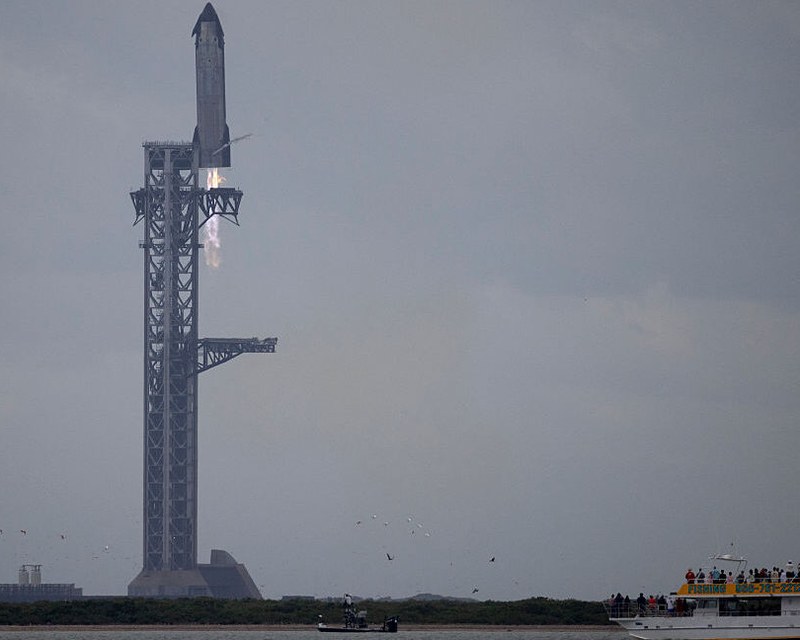
- SpaceX catches upper stage of Starship rocket
- 🔒 Member extra: A new policy could help solve the U.S. organ shortage. Critics say it's unethical
Presented by

Today’s Big Story
Ready to Fly?
U.S. flights are expected to return to near-normal levels on Monday as airlines scramble to get back on track

Sometimes, it’s the tiniest thing. A single router in El Dorado, Arkansas, stranded a country. The FAA halted departures nationwide for more than four hours Friday. That’s the longest stoppage since 9/11, lifting around 8:15 p.m., and the ripple took the entire weekend to work out. Airlines and officials now say today should run close to normal. Should.
But the weekend was ugly. CNBC, citing FlightAware, counted roughly 2,000 cancellations and more than 7,500 delays by Sunday afternoon, an improvement on Saturday’s 6,697 cancellations. American canceled around 13% of its entire schedule. Delta scrapped nearly 500 flights, too. JetBlue dumped nearly a third of its operation.
Transportation Secretary Sean Duffy pinned the outage on a router installed during a copper-to-fiber upgrade that he said “flooded our network.” Contractor L3Harris says it's supporting the FAA investigation. Whether this was contractor error or faulty hardware is still unresolved—nobody has said definitively. What has happened fast is the funding fight: Trump and Duffy want billions more for air traffic control, with PBS NewsHour putting the ask at $30 billion and CNBC reporting a figure as high as $50 billion. Democrats counter that money from last year's $12.5 billion package is still unspent.
Holding Thanksgiving tickets? Officials say the system is safe and schedules should smooth out before the rush. That’s the assurance on offer—delivered by the same agency that just learned its network can be taken down by one box in Arkansas. You might want to build in the buffer anyway.
Yes, But:
Americans heard from the homeland security secretary. They heard from the transportation secretary. But not the president.
Bahrain Intercepts Iranian Strikes
Tehran is cliaming it targeted U.S. assets
Six Iranian drones flew at a U.S. air defense radar system at the Al-Riffa helicopter base in Bahrain early Sunday, according to Iran’s Revolutionary Guard Corps. Bahrain’s Defense Ministry said it intercepted several aerial attacks before they landed, with no injuries or damage reported. The interior ministry told residents to move to safe locations.
That’s the second intercepted Iranian attack in two days (an early-warning radar facility was hit Friday) and Bahrain’s first major strikes since September. Saudi Arabia, Qatar, Jordan and Egypt all condemned the attack. The diplomatic track, meanwhile, is going nowhere. President Donald Trump said last week “we don't need a deal” and pulled Vice President JD Vance off the negotiations, CBS News reported. Iran separately rejected German demands that it halt uranium enrichment. Two countries talking past each other while drones are in the air is not a de-escalation posture.
But the Strait is the part that reaches your wallet. Shipping disruptions have kept inflation stubbornly high. Plus, CBS cited a military official saying the carrier is already in the Middle East, which would make three in the region; the Washington Examiner reported it could show up today. Either way, the hardware is converging faster than the diplomacy.
|

The Storied Lineage of the Honey Trap
Jensen Huang has resigned as CEO of Nvidia after reports of affairs with three women—two of them employees, and Alice Huang, a Chinese technology executive allegedly working as an asset of China’s Ministry of State Security. Beijing called the intelligence claims a “pure fabrication out of thin air.” The company he started out of a Denny’s in San Jose was the first to hit a $5 trillion market cap.
The stakes aren’t merely gossip. Nvidia’s chips sit at the center of AI and of the U.S. technology fight with China, which makes a compromised chief executive a national-security problem, not an HR one. Huang’s carefully tended relationship with President Donald Trump has kept presidential support intact so far, as The New Yorker notes—it just didn’t keep him his job. The honey trap, the magazine argues, is less a spy tactic than a literary archetype with a long bibliography.
According to CNBC, corporate security experts are now well-versed in teaching people how to avoid “honeypot” schemes. As competition in the global artificial intelligence race heats up, OpenAI is reportedly training employees to recognize espionage tactics including bribery, romantic manipulation and blackmail, reports the Wall Street Journal. On Nov. 3, cryptocurrency exchange Binance revealed that a recent cyberattack — which saw roughly $6 billion of digital assets stolen — was partially made possible by a fake job interview scheme that infected an employee’s work computer with malware.
|
|


|
🔒 Today’s Member Extras |

Exclusive |
|
|
|
Health & Fitness Debriefing
The Trends You Need to Know About Right Now
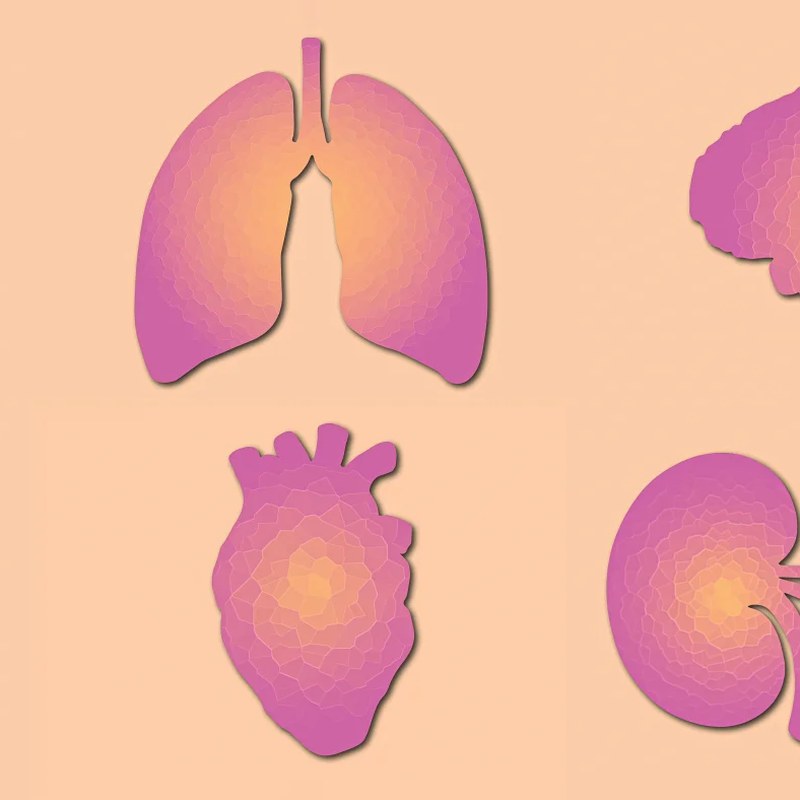
A New Policy Could Help Solve the U.S. Organ Shortage. Critics Say It's Unethical
Today on


The easiest cold-weather layer you own, in more shapes than ever.

