Wednesday, November 18th Edition |

What’s your “word of the year”? Mine is four letters and starts with the letter F.
Let’s dive in today …
Presented by

Today’s Big Story
Word of the Year
The latest selection says a lot about the moment we’re in

Cambridge Dictionary has named its 2026 Word of the Year, and for once you won’t need a teenager to explain it. The word is “human.” It’s been in the language since the 15th century. It won because, as CNN reports, the dictionary says this year has been “defined by global debates on what it means to be human” as AI blurs the line between people and machines.
The definition hasn’t changed much. Cambridge says being human means having the qualities, faults, and feelings that people have, as opposed to gods, animals, or machines. Machines are the newest thing on that list, and they’re why the word is everywhere now. It shows up in labels like human-written, human-generated, and human-made. Those used to go without saying. Now they’re printed on the packaging.
Cambridge lexicographer Colin McIntosh told The Independent that “AI is changing how we talk about being human.” He said worry about what we lose by handing our thinking to machines has made people rethink how much they rely on AI, from top mathematicians to teachers of young children.
Even Bill Gates weighed in. He has spent years encouraging people to use AI well, and his take was simple: “The measure of AI’s success should be how much it improves human lives.” Other contenders this year included “agent,” for an AI system that can make decisions on its own. Cambridge chose “hallucinate” for AI’s tendency to fabricate information back in 2023, so the robots have been on the shortlist for a while.
What does it mean for the rest of us? Things made by people are worth more than they used to be. Think of a hand-stitched buttonhole, a barber who remembers your usual or a note written in actual ink. Sure, none of that’s new, but people are really paying more attention to it now.
Meanwhile:
“Mogging” is also being called out this year, but men have been doing it since Shakespearean times.
U.S. Launches New Strikes on Iran
U.S. fighter aircraft struck a missile launch site in the Strait of Hormuz
American fighter aircraft hit an Islamic Revolutionary Guard Corps missile launch site on Iran's Qeshm Island on Tuesday, dropping precision munitions on a speck of land that sits inside the Strait of Hormuz. A U.S. military official called it a self-defense response to “IRGC aggression targeting U.S. personnel and assets.”
The strike landed hours after an Iranian attack on a U.S. radar system in Bahrain. CENTCOM said every projectile was intercepted—the third intercepted Iranian attempt on a U.S. installation in five days. Iran’s Hormozgan deputy governor confirmed the strike and said no residential, commercial or infrastructure areas were damaged. This is the third confirmed strike on Qeshm Island this month.
And the oil math is already rerouting. Iraq resumed pumping crude to Turkey at 120,000 barrels a day, scaling toward 500,000, explicitly to bypass Hormuz. Iranian claims that tankers have struck sea mines near the strait remain unconfirmed; the U.S. military says the southern lanes are mine-free. Qatar says U.S.-Iran mediation is still running, which is the only thread here that points anywhere but down. Everything else reads like both sides preparing for the talks to fail.
|


Why Does It Suddenly Seem as if Everything Is Falling Apart?
Email. Air travel. Banking … what’s next?
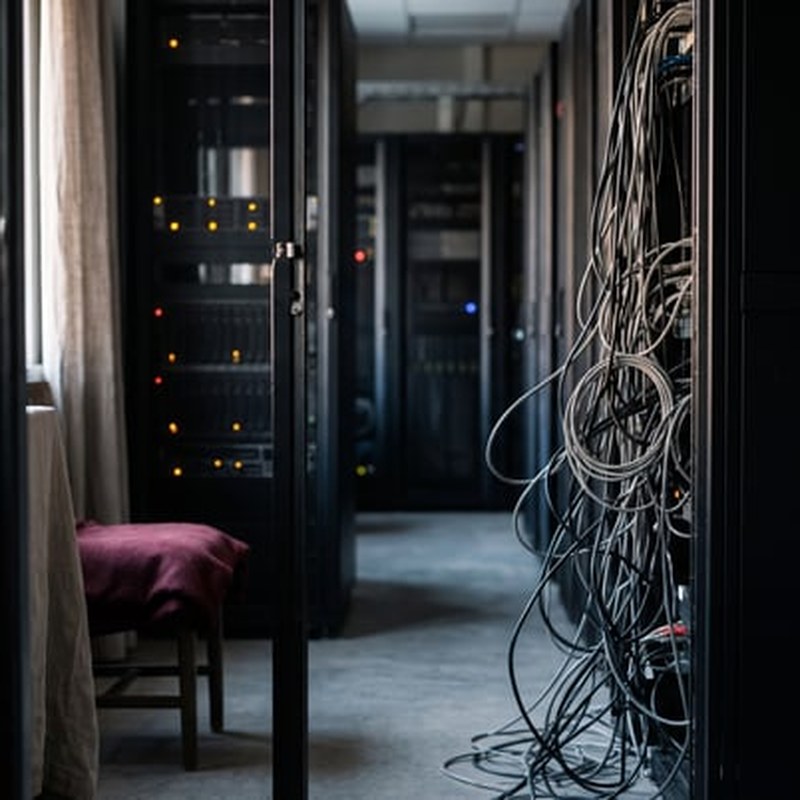
Six days, six failures. A global Microsoft outage starting Thursday locked users out of Outlook and Teams, hitting hospitals, businesses and governments. Friday evening, an FAA technical issue triggered the longest nationwide ground stop since 9/11. Monday, a JPMorgan Chase glitch cut thousands of customers off from online accounts and Zelle, and a 90-minute United Airlines system problem delayed departures. Tuesday it was NSANet, then Apple.
The instinct might be to blame AI. Slate says that’s probably wrong. A newly installed router at an FAA outpost in Arkansas appears to have caused the ground stop, and an overdue software update looks like the culprit behind NSANet. Boring infrastructure, boring maintenance—not the robots.
Patrick Moorhead, founder of Moor Insights and Strategy, tells USA Today there is no evidence of a coordinated cyberattack and “nothing is falling apart.” Instead, these compounding outages highlight a deeper structural vulnerability: How heavily our critical infrastructure relies on highly concentrated systems. “When one piece fails, it fails at national scale.”
Quoted:
“Humans see patterns in everything, regardless of whether they’re there, and generally interpret coincidences as conspiracies,” a security technologist told Axios.
|
|


|
🔒 Today’s Member Extras |

Exclusive |
|
|
|
Business & Finance Debriefing
The Trends You Need to Know About Right Now
Microsoft, the FAA, Chase and United Each Failed on Their Own in One Week
Today on