
Tuesday, July 14th Edition |
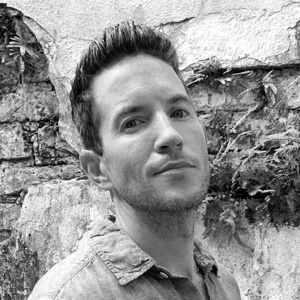
Have you heard the saying, no one is ugly … they’re just not rich?
Let’s dive in today …
Presented by

Today’s Big Story
A Plastic Surgery Crisis?
As cosmetic procedures become both more invisible and more extreme, our connection to reality is fraying

What constitutes “real” anymore? Even those who haven’t gotten cosmetic procedures done utilize filters on photos and videos. And anyone who can afford it seems to boost their appearance. We’re in the golden age of “micro-procedures” like baby Botox and other nips and tucks. People treat lasers and small injections like routine maintenance, akin to going to the dentist.
And this is just how it is … we hear the whispers. “Are those new teeth?” Or “did you hear he flew to Turkey and came back with a new hairline?” As The New Yorker points out, it’s been building for a while. Starting about bout a decade ago, when the most visible faces on Instagram—those belonging to famous white models and influencers—began to resemble one another. “They already had full lips, catlike eyes, high cheekbones, flawless skin; Botox and filler made their lips more plump, their eyes more catlike, their cheekbones more pronounced. They began to look like cyborgs, their faces contoured by the algorithm, perpetually glinting in the light of digital approval.”
Now we have arrived at a place where you can acquire Instagram Face at your local strip mall and the monied are seeking facelifts instead. Instagram Face can be achieved with little tweaks and outpatient procedures, although the results are often overtly artificial. And while it used to be very hush hush, Vogue dubbed 2025 “the year of plastic surgery transparency.”
Of course, like with any renovation—be it a building or a body—when you start tinkering one improvement could lead to something else that needs to fixing. As science and surgical technique progress ad nauseam, so does our appetite for new curves, tighter skin, sharper jawlines. And now the latest option is injecting fat harvested from donated dead bodies into the bodies of those who’ve lost too much on GLP-1s.
Meanwhile:
Breast implant removal is more popular than ever. And health concerns like “breast implant illness” are only one part of the story.
The Hormuz Blockade Is Back
Oil prices climbed after Trump said he would reimpose U.S. blockade. And shipping could go up too.
It’s a crude reality for oil markets, which are higher once again after posting the biggest one-day surge since the COVID era on Monday. The move was sparked by President Donald Trump’s decision to reinstate a naval blockade in the Strait of Hormuz. Posting on social media, “The U.S.A. will be, from this point forward, known as ‘THE GUARDIAN OF THE HORMUZ STRAIT,’” he claimed. “But as such, and as a matter of FAIRNESS, will be reimbursed, at the rate of 20% on all cargo shipped.”
The news pushed Brent and U.S. crude futures up more than 10%, wiping out a month of oil-price declines that came as skirmishing in the Persian Gulf waned and tanker traffic appeared to be returning. “The chance of the region and Hormuz going back to the old normal is effectively zero,” one expert told the Wall Street Journal. Saudi Arabia, Iraq and the United Arab Emirates have identified the strait as a persistent vulnerability that must be engineered around. They plan to build new and expanded pipeline capacity to other ports—and through other countries—to keep pumping oil.
Analysts are also saying they doubted whether this new American fee would come into existence because of the costs it would impose. And for ship operators in the region, the prospect of fees is less of a concern right now than the escalation of the conflict between Iran and the United States in recent days. Still, it’s stirring up concern. There has yet to be an explanation of how the 20% fee would be calculated, but if it were charged on the value of the cargo, it could more than double the cost of shipping oil through the strait.
FYI:
U.S. Central Command said it has completed another five-hour mission striking targets across Iran.
|

America Is Divided. But Not on Costco.
The warehouse club may be our last best source of common culture
It makes sense. What’s not to love about free samples, plenty of options, discounts and those hot dogs? But even before a stream of wide-eyed World Cup visitors arrived in the U.S. this summer to marvel at the square footage and enjoy the free samples, it’s been a busy year in the Costco cinematic universe.
Alongside more predictable viral hits of influencers curating store offerings for the Super Bowl and Lunar New Year, viewers were treated to TikTok and Instagram updates about date nights in the warehouse club, in-store marriage proposals and even Costco-themed house parties. As the old metrics of monoculture (box-office sales, Nielsen ratings or albums sold) whither away, experts now say that the common ritual of Costco suggests that monoculture hasn’t disappeared. It’s just been reformatted.
Costco won’t say how much it spends (or makes) from giving out so many free samples, but no retailer is more famous for its sample smorgasbord. Studies show these tasty handouts thrill shoppers and keep them coming back for more. Free samples are such a staple of the cardholder experience that shoppers grieved when Costco temporarily suspended them during the pandemic and celebrated their return.
|

|


|
🔒 Today’s Member Extras |

Exclusive |
|
|
|

Science & Space Debriefing
The Trends You Need to Know About Right Now
A single human neuron is itself an extraordinarily sophisticated computing device and EV batteries have a recycling problem.
Today on


Your closet has a scent. The question is whether it's one you actually like. These fragrance tags are the easiest way to keep clothes, closets and gym bags smelling clean and refined.
Get up to 35% off the retailer’s best-selling clothes and gear.

Partner
More than two years of research and fit data from three million workers helped Red Wing create a work boot that's built for comfort from the very first wear.


