Tuesday, September 29th Edition |
If you ask me, empathy is never a bad thing. In fact, we could all probably use a little more these days.
Let’s dive in today …
- The Trump administration weakens fuel efficiency standards
- Samuel Alito steps aside in a major climate case
- Cornell fraternity rape investigation will be reopened, DA says
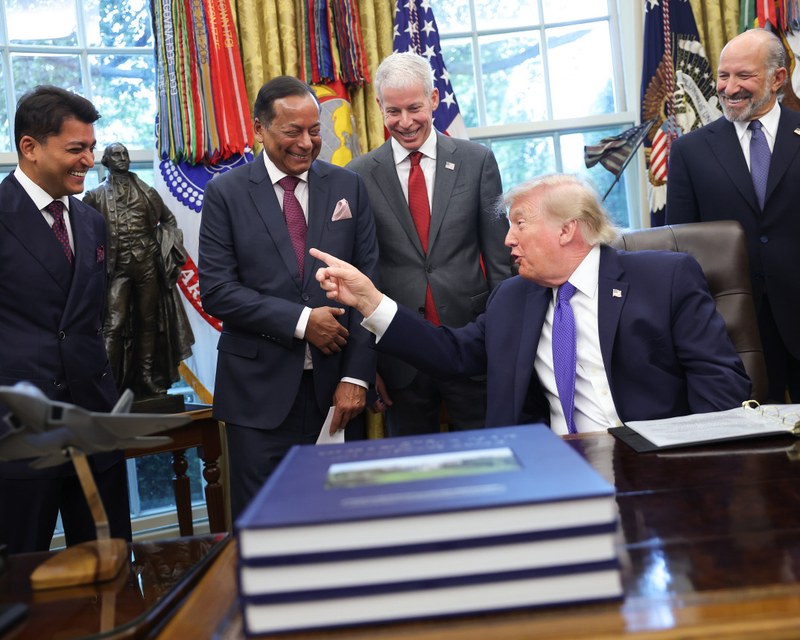
- Trump announces plan for $15 billion steel plant
- 🔒 Member extra: Space lasers are about to get their first real test generating energy
Today’s Big Story
Trump Weakens Fuel Efficiency Standards
The administration cut fuel economy standards back to 2014 levels

The Department of Transportation finalized a rule Monday gutting Corporate Average Fuel Economy standards, and the new math is stark: a fleetwide average of 34.9 mpg by model year 2031, down from the 50.4 mpg projected under the Biden-era 2024 rule. Ars Technica notes that’s lower than the standards President Donald Trump himself set in 2020. In fact, it takes it back to 2014 levels.
The mechanics matter more than the numbers. Starting with model year 2028, emissions credits go away and plug-in vehicles no longer count toward a company’s fleet average. In 2030, the classifications that separate light trucks from passenger cars change too—the lever automakers have long used to build bigger and heavier.
DOT is calling it among the largest deregulatory actions of Trump’s second term, and it’s pitching the savings hard: $1,300 off the average new vehicle and $138 billion over five years. But those figures are disputed. Kelley Blue Book’s Sean Tucker said automakers aren’t going to redesign cars around a rule likely to survive two or three years. CarEdge was even more blunt: prices won't fall.
What you’d actually feel is at the pump. The Environmental Defense Fund estimates drivers pay at least $1,600 more in fuel under the weaker standards—a number that stings more right now, with gas averaging $4.48 a gallon Monday, up from under $3 earlier this year. The trade seems to be cheaper sticker, pricier ownership. Not so smart.
FYI:
The Sierra Club has vowed to fight this “every step of the way,” though no filing or legal theory has been made public yet.
Samuel Alito Steps Aside
The Supreme Court Justice recused himself in a major climate case amid scrutiny over oil stock holdings
Justice Samuel Alito is out of the biggest case on the Supreme Court’s opening docket. In a one-line letter Monday, court clerk Scott Harris said Alito “has determined that he will not continue to participate” in Suncor Energy (USA) Inc. v. County Commissioners of Boulder County — the climate suit the court hears Oct. 5 to open its term. No reason given. None since, either.
The case itself is the fight every oil major is watching. Boulder’s city and county sued in 2018, alleging the companies concealed the dangers of fossil fuels, and Colorado's Supreme Court let the claims proceed. The question now before the justices is whether federal law preempts state-law climate damages claims—a ruling that would reach dozens of similar suits filed across the country.
The recusal is actually a reversal. In May, a court spokeswoman told NBC News that Alito had no financial interest in any party and that the court’s counsel had advised recusal wasn’t required. Alito holds no stock in Exxon Mobil or Suncor. He does own ConocoPhillips and Phillips 66, plus five other energy-sector companies, according to his 2025 financial disclosure. What changed between then and now is still unexplained. But with eight justices, a 4-4 split is live, which would leave the Colorado ruling standing and settle nothing nationally. The oil companies came to Washington for a clean kill. They may get a tie instead.
FYI:
The case is set to be argued on Oct. 5th.
Cornell Frat Rape Investigation Reopened
Tompkins County District Attorney Matthew Van Houten said Monday he's reopening the criminal investigation into an alleged 2024 gang rape at Cornell’s Chi Phi fraternity house that recently resurfaced on social media. He will take the evidence to a grand jury.
Nobody was charged when it happened. That changed after a lawsuit landed. The civil suit alleges seven fraternity members plied a student with alcohol, marijuana and ketamine, then assaulted her over several hours. Van Houten has defended the original decision not to charge, saying her original statement described the drug use and sexual conduct as voluntary and consensual, and that her lawyers never contacted his office.
Ithaca police told CBS News the incident was never reported to the department; the lawsuit says the department is actively investigating. Cornell says its Title IX process resulted in expulsions and suspensions, and that the Chi Phi chapter is barred from campus. Giuffra says two students were expelled and five received lesser penalties, including writing essays. The university disputes that essays were a sole consequence and won't give numbers, citing privacy law. So the actual sanctions remain unresolved, which is a large part of why this is now a national story.
|
|



|
🔒 Today’s Member Extras |

Exclusive |
|
|
|

Science & Space Debriefing
The Trends You Need to Know About Right Now
Space Lasers Are About to Get Their First Real Test Generating Energy
Today on


A century after its Bauhaus debut, tubular furniture is looking remarkably fresh again.